A scam alert is most useful before a stressful lockout turns into a rushed purchase. A lockout is stressful. You may be standing outside your home, car or office, perhaps late in the day, with a phone battery running low. That urgency makes it easier to accept a vague advertisement or a price that changes dramatically after someone arrives. A careful hiring process does not require hours of research, but it does require a few direct questions. This guide explains practical warning signs, what a useful estimate should include, and how to protect yourself before authorizing work.
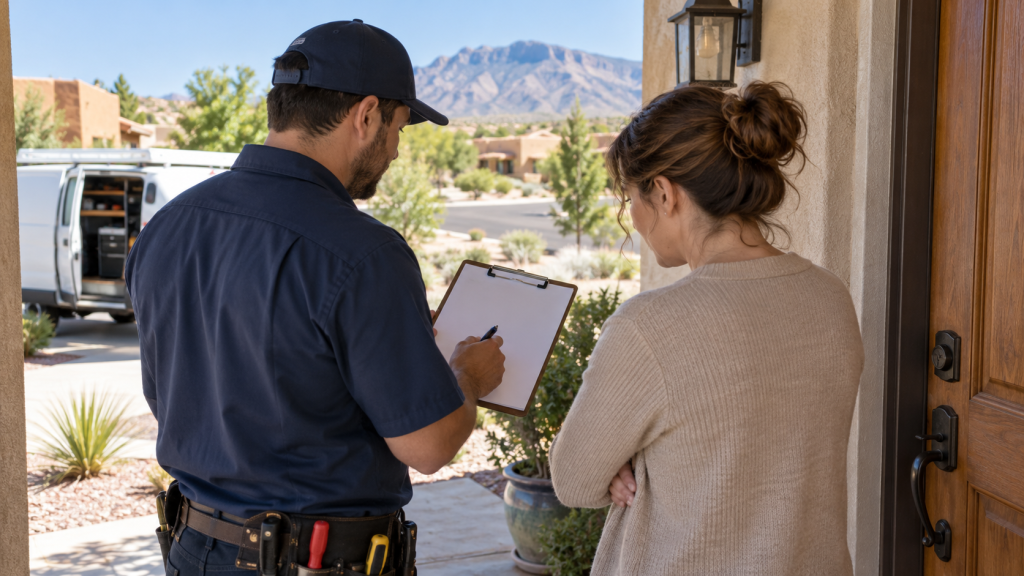
Budget Locksmith of New Mexico serves Albuquerque and Rio Rancho. Call (505) 509-5770 to describe the lock and request an estimate for your situation. We encourage customers to understand the scope before work begins.
Scam alert: begin with the actual problem
A low starting price in an ad may refer to a service call only, a narrow labor task, or a condition that does not match your job. Ask what the quoted amount covers. Does it include travel, diagnosis, labor, parts and taxes? Could the price change if the lock is damaged or a special key is required? A legitimate professional may need to inspect the hardware before giving a final total, but should explain the basis of the estimate and seek your approval before doing additional work.
Give clear details when you call. Say whether the job involves a house, vehicle or business, your approximate location, the lock type if known, and whether a key is lost, broken or simply inside. If a key turns but the door will not open, mention that. If a car uses a transponder or push-button start, say so. Accurate information helps the provider give a realistic range and bring appropriate equipment. It also makes it easier to recognize an estimate that does not match the job described.
Verify the business and who is arriving
Look for a consistent business name, local contact information and a website that describes the actual services. A listing with many unrelated company names or a phone number that changes repeatedly deserves closer scrutiny. Ask the dispatcher for the name of the company that will perform the work, not just the call center’s name. When someone arrives, compare the technician and vehicle with the information provided and request identification if needed. Do not assume a logo alone proves affiliation.
Professionalism includes explaining the work and confirming authorization. A locksmith should have a reason to believe you are entitled to access the home, vehicle or business. Be prepared to show reasonable proof of ownership or occupancy. If the provider offers to open anything immediately without establishing your right to enter, that can be a warning sign. The verification process protects the property owner as well as the locksmith.
Understand the estimate before work begins
A useful quote identifies the service and the conditions that affect price. For example, it might separate the trip charge from labor, explain whether a standard lockout method is expected, and state how damaged hardware or replacement parts would be priced if discovered. Ask whether the estimate is a fixed price or a range. If it is a range, ask what would move the job to the higher end. Request the total in writing or in a message when possible, especially for expensive work.
Do not approve a blank form or a work order with no meaningful description. If the technician finds a complication, pause and ask for a revised explanation and price before they proceed. You can decline optional work. A genuine emergency, such as a door that cannot be secured, still does not require accepting unexplained charges. Ask for an itemized receipt afterward showing the service, parts, taxes and payment amount.
Watch for pressure and unnecessary destruction
The FTC describes common scam warning signs, including urgency and pressure to pay in hard-to-recover ways. A scam alert is a reason to pause and verify the quote, not a reason to assume every unexpected cost is fraudulent.
Sometimes a lock is damaged and replacement is necessary. That does not mean every lockout requires drilling. Ask why a proposed method is appropriate and whether less destructive options were considered. Different lock types and security features affect what is possible, so no honest provider should promise that every opening will be damage-free. The concern is a technician who quickly demands destructive work without examining the lock or explaining alternatives.
High-pressure tactics include saying a quoted price is only valid for the next few minutes, refusing to identify the company, or claiming you must pay for work you did not authorize. If the situation feels wrong, stop the work while the property is still safe and contact another provider. For a vehicle or property with special access controls, ask whether the technician has experience with that system rather than assuming all locksmith work is interchangeable.
Compare value, not just the cheapest headline
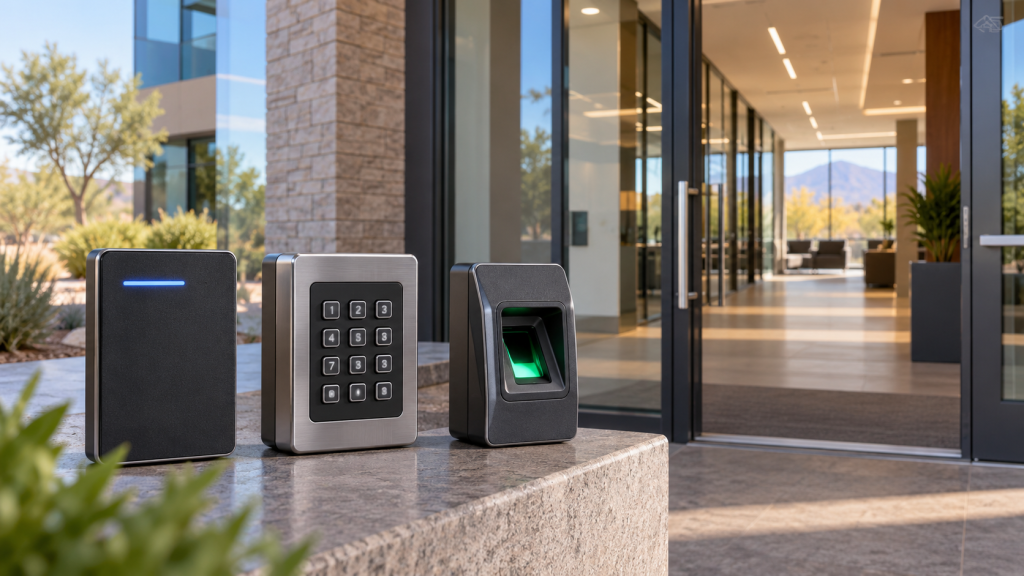
A fair quote reflects the actual work, location, timing, parts and complexity. A late-night call may cost more than a scheduled daytime appointment. A simple duplicate key is different from a programmed vehicle key. Commercial access hardware differs from a home deadbolt. That is why a single universal price would be misleading. Compare providers on clarity, scope, verification, realistic arrival information and willingness to answer questions, not solely on the smallest number in an advertisement.
Check recent reviews for patterns rather than relying on one extreme comment. Look for descriptions of pricing communication, work quality and follow-up. A business with residential, automotive and commercial services should still explain which of those applies to your call. Save the details of the provider you choose so you can verify the invoice afterward.
Make a brief call checklist
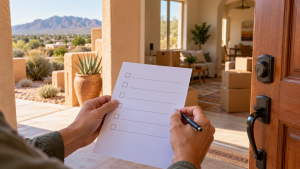
Before you book, ask: What is the company name? Who will arrive? What is the service-call charge? What work is included in the estimate? What situations could increase it? How will I approve a change? Will I receive an itemized receipt? What proof of ownership or authorization should I have ready? These questions take only a few minutes. A provider who answers them clearly is easier to work with when you are already under pressure.
If you are locked out of a car in an unsafe location, prioritize your personal safety and contact appropriate emergency services if necessary. For routine situations, stay in a safe, visible place while waiting. Do not share a door code or other sensitive access detail with multiple unknown providers as you compare quotes.
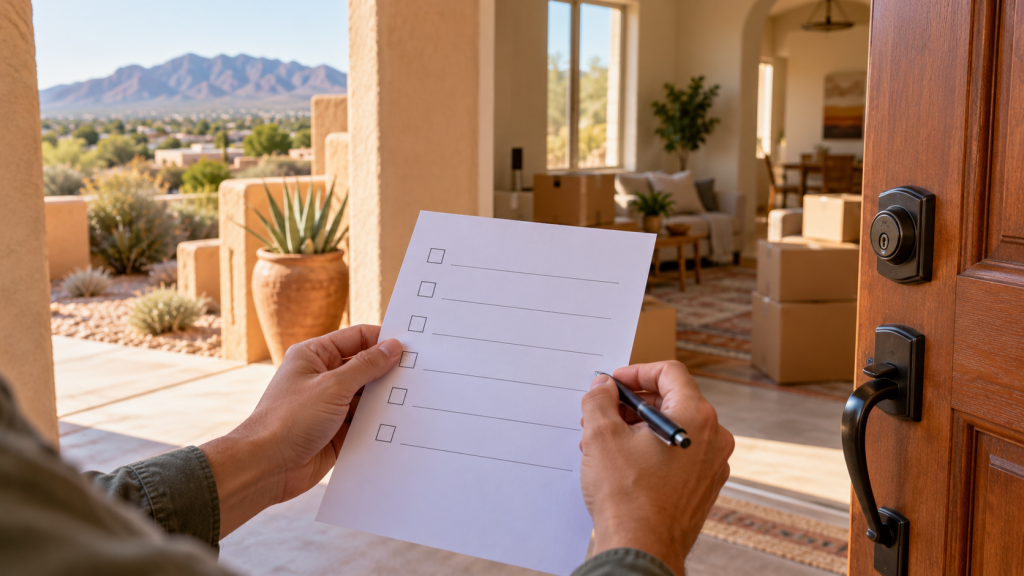
Scam alert checklist for a five-minute call
Describe the exact problem before asking for a number. Say whether you are locked out of a home, car or business, whether a key is broken, and whether the door or lock appears damaged. Ask the company to explain its service-call charge, labor, parts and any after-hours or travel fee. A quote can depend on what the technician finds on site, but the business should explain which conditions could change it and when you will be asked to approve more work.
A practical scam alert is not based on one unusually low advertised price alone. It is the combination of a vague listing, a name that changes when you call, refusal to identify the arriving technician, pressure to approve drilling before diagnosis, and a final price that was not discussed. Ask for the business name and callback number and check them independently. If you are in a safe place, take a moment to compare another provider before agreeing to work.
Before the technician begins, request a written estimate that identifies the work proposed and the likely total or a clear range. If the diagnosis changes, ask for an updated explanation and price before the work continues. Keep a copy of the invoice and note the parts installed. A scam alert should help you slow the process enough to make an informed decision, while still allowing a legitimate locksmith to address an urgent problem.
Do not authorize a destructive method merely because it is presented as the only option. The right technique depends on the lock, door and situation. Ask why the proposed method is necessary and what damage or replacement it would cause. The technician may also request proof that you have the right to access the property or vehicle; that is a normal security step. Your goal is a transparent service visit, not a promise that every lock can be opened without damage.
What a fair estimate can and cannot promise
A phone estimate should explain the charges the company knows before it sees the lock: dispatch or service call, after-hours conditions, likely labor and possible parts. It should also explain why an exact total might depend on the lock model, damage or access method discovered on site. A scam alert is warranted when the caller refuses to identify any of those components, insists on a tiny headline price without context, or says the technician can only explain the total after the work is complete.
When the technician arrives, ask them to confirm the business name and the problem you described. Before work begins, ask for a written estimate or a clearly documented scope and price. If the lock is more complex than expected, a legitimate provider can explain the difference and seek your approval before changing the plan. You can decline work you did not authorize. Keep any advertisement, text message or quote so you can compare it with the invoice later.
How to handle pressure on site
Being locked out can make any delay feel uncomfortable. Even so, take a moment to read the proposed work. A scam alert may arise if someone claims every lock requires drilling before examining it, refuses to discuss an alternative method, or demands immediate payment through an unusual channel. Destructive entry may sometimes be necessary, but it should be explained in relation to the specific hardware and the likely replacement cost. Ask what will happen to the door and whether it will remain secure after the service.
If you feel unsafe or pressured, move to a safe location and call a trusted person. Do not argue over the lock at the door. If a payment dispute arises, keep records of the quote, invoice and communications. A scam alert is a cue to document facts and pause, not to make assumptions about a worker based on appearance or accent. The goal is to separate a transparent, justified change in scope from a surprise charge that was never agreed upon.
For future emergencies, save the contact information for a provider you have checked in advance. A small amount of preparation reduces the pressure to pick the first search result during a lockout. Store the number in more than one place and make sure household members know whom to call. Keep an authorized spare-key plan that does not expose the property to unnecessary risk.
Apply the same checks to different lockouts
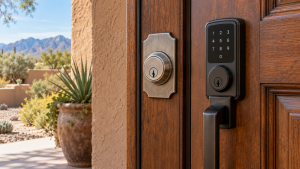
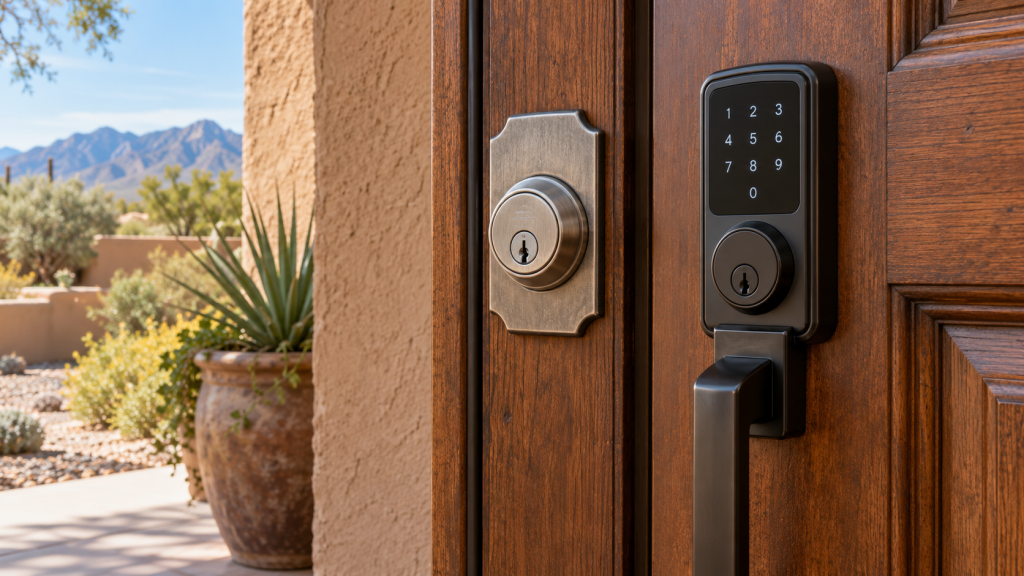
At a home: explain whether the door has a standard cylinder, a smart lock, a broken key or visible damage. A scam alert is more meaningful when you compare the quote with the actual problem. Ask whether the quoted work is opening the door, repairing the lock, or replacing parts; those are different scopes. If a lock is damaged, ask whether the home can be secured after the visit. The lowest opening price is not useful if it leaves an exterior door unable to lock.
At a vehicle: identify the year, make and model before requesting a quote. A door opening, a lost key replacement and programming a key fob are different services. Confirm which one you need and whether the provider can perform it for that vehicle. If a quote changes because the vehicle requires a different process than described, request the new scope and price before work continues. Keep proof that you are authorized to access the vehicle.
At a business: identify whether the issue involves a storefront door, an interior office, a cabinet or an access-control system. A commercial door may require coordination with a manager or building owner. A scam alert should prompt verification of authorization and a clear scope, not a hurried decision that disrupts employees or customers. Ask who will approve any additional work if the person on site is not the owner.
Review the invoice before paying
The invoice should make sense beside the approved estimate. Look for the service address, date, work performed, parts used, labor and any previously explained travel or after-hours charge. Ask for clarification while the technician is present if a line item is unfamiliar. A fair quote does not guarantee that every job costs the same, but it gives you a basis to understand changes. If the scope changed, the reason and your approval should be clear.
Keep the invoice with photos and messages, especially if a new lock was installed or a warranty was discussed. Verify that the door, key or electronic credential works before the technician leaves. Test the lock with the door open and closed when appropriate. A scam alert is easier to evaluate from a complete record than from a memory of a stressful moment. If you believe you encountered fraud, the FTC reporting portal provides a way to report it; keep the facts and documents ready.
Save the provider’s name, number and written quote after a satisfactory visit. Share that information with the people who may face the next lockout. A prepared household or office can compare a new estimate calmly and recognize a scam alert without relying on a rushed search result. Clear communication, documented authorization and a working lock are the practical outcomes to look for.
Frequently Asked Questions
Is a very low online locksmith price always a scam?
Not necessarily, but it may cover only a narrow part of the job. Ask what it includes and what could change the total. A quote that cannot be explained is a stronger warning sign than a low number by itself.
Should I ask for a written estimate?
Yes, especially when parts or complex labor may be involved. A message or work order stating the service, price basis and possible changes helps both sides agree on the scope before work starts.
Does every lockout require drilling?
No. The appropriate method depends on the lock and circumstances. Ask why drilling or replacement is recommended and whether a less destructive method is available. Do not assume damage-free entry is always possible either.
Why would a locksmith ask for identification?
A professional should take reasonable steps to verify that you are authorized to access the property or vehicle. Have proof of occupancy, ownership or permission available when practical.
What if the final price differs from the phone quote?
Ask for an explanation before approving changed work. A complication can alter the scope, but the provider should tell you what changed and get your consent before proceeding with extra charges.
Request a clear estimate
A trustworthy locksmith interaction starts with a clear description, a realistic quote and approval before work changes. For lock or key help in Albuquerque, call Budget Locksmith of New Mexico at (505) 509-5770. Explain the situation and ask the questions that matter to you before service begins.