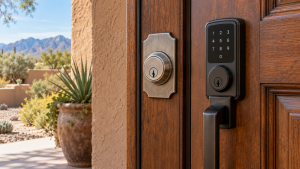

lock care starts with observing how heat, dust and monsoon rain affect each entrance. Albuquerque weather can be demanding on exterior doors. Summer sun heats a door and frame, wind deposits fine dust around the keyway, and monsoon rain can soak hardware that has been dry for weeks. A lock that worked smoothly in spring may feel stiff by late summer. The cause is not always the cylinder itself: the door, latch, strike plate, key and weather seals all affect how a mechanism works. This guide explains what you can observe, what routine care is reasonable, and when a professional inspection is the safer choice.

If a door cannot be secured or a key is stuck, call Budget Locksmith of New Mexico at (505) 509-5770. Our residential locksmith service serves Albuquerque and Rio Rancho.
Heat can change door alignment
Heat does not have to visibly warp a lock to cause trouble. A sun-facing exterior door and its frame can move slightly as temperatures change. Wood also responds to moisture. Metal components expand by small amounts. The gap between a bolt and its strike opening is small, so a minor shift may be enough to make a deadbolt rub. You may need to pull the door toward you or lift its handle before turning the key. Those motions are clues that the door is carrying pressure the bolt was not designed to absorb.
Test the lock while the door is open. If the key turns freely and the bolt extends fully, then binds only when the door is closed, alignment deserves attention. Look for rubbing along the frame, sagging at the hinge side, loose screws, or weatherstripping that pushes the door away from its normal position. Do not repeatedly force the key; doing so can wear the cylinder or break the key. Moving a strike plate without finding the underlying cause can leave the door less secure. Our lock repair and adjustment service can inspect both the hardware and the opening.
Dust makes a smooth key feel gritty
lock care should include checking for windblown grit, which can settle on exposed keys and around exterior hardware. Each insertion may carry a little more debris into the keyway. A worn key adds another problem because its edges may no longer position the cylinder’s internal parts cleanly. Signs include scraping during insertion, a key that needs repeated jiggling, and a cylinder that turns only at certain angles. Take note of whether a clean spare key behaves differently. That observation can help distinguish key wear from a problem within the lock.
Avoid pouring household oil into the cylinder. Oil may collect more dust and create sticky residue. Do not probe the keyway with wire or other objects; they can damage delicate parts or push debris deeper. A manufacturer may recommend a particular cleaning or lubrication product for a specific model, but an unknown or already-jammed lock should be assessed before you add chemicals. Keep keys clean, replace visibly bent keys, and protect frequently used entrances from dust where practical. If a key is close to breaking, stop using it and arrange service.
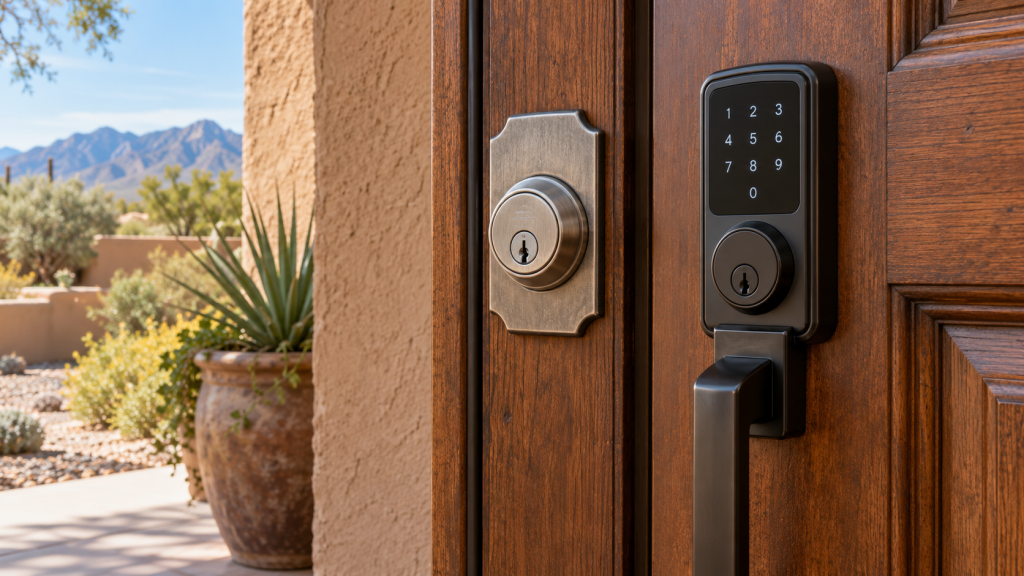
Monsoon rain changes the problem
Rain can carry accumulated dust into seams and leave moisture around screws or an exposed cylinder. Water standing at the threshold may also signal a drainage or weatherstripping issue. Exterior hardware should be suited to its exposure, but weather resistance varies by model and installation. As part of lock care after a storm, wipe accessible surfaces with a soft cloth and let them dry. Check for rust, loose trim, damaged seals, or water trapped around the door. If the lock remains rough after drying, the problem may be inside the mechanism and should not be dismissed as temporary.
Electronic and smart locks need special care. Their housings, battery compartments, and manufacturer ratings differ. Do not assume that a device marketed for an entry door can withstand direct water exposure on an unprotected gate. Follow the maker’s instructions for replacing batteries and checking seals. If the keypad or motor behaves unpredictably after a storm, use the backup access method if available and seek qualified help rather than repeatedly cycling the device.
lock care checklist
For current weather and monsoon information, consult the National Weather Service in Albuquerque. lock care should follow the conditions at your property. Before the hottest part of summer and again after monsoon season, walk through every exterior entrance. Open and close each door normally. Check that the latch catches without slamming, and that a deadbolt extends and retracts with the door both open and closed. Look at the hinges and mounting screws. Confirm the key enters and leaves without excessive force. Test a spare key too. Include the garage side door, patio gate and rarely used storage entrance; these openings may have more weather exposure and less daily attention than the front door.
This lock care inspection is about detecting changes, not dismantling hardware. If a screw hole is stripped, a hinge has shifted, or a door rubs the frame, a quick surface fix may not last. Document the condition with a photo and note whether symptoms happen during hot afternoons, after wind, or following rain. Rental owners can add this lock care check between occupants. Businesses can include external doors in routine facilities inspections and refer specialized access hardware to a technician experienced with commercial systems.

When to repair or replace
Contact a locksmith when the bolt will not extend fully, the door cannot be locked, the key bends during normal use, the cylinder spins without operating the latch, or corrosion is visible. If a key breaks, avoid pushing the fragment farther into the lock. Our broken key extraction service can evaluate removal and the condition of the cylinder. A professional may recommend adjustment, repair, rekeying, or replacement depending on what has failed. Replacing the cylinder alone will not solve a misaligned door, while adjusting a door will not restore a worn-out cylinder.
For commercial property, the stakes may include employee access and closing procedures. Keep a record of which doors have the same symptom and whether an access-control component is involved. Our commercial locksmith service can evaluate that setting. Whatever the property type, choose the fix that restores reliable locking rather than the one that merely makes the key turn once.

What to record before requesting service
A useful service request describes the entrance, the hardware and the conditions under which the problem appears. Note whether the key turns freely with the door open and whether the bolt binds only after the door closes. Record the time of day, recent rain or wind, and any visible rubbing at the frame. Photograph the strike plate, hinges and exposed hardware without sharing key codes or security credentials. These details help a technician separate a door-alignment problem from cylinder wear and plan the right inspection.
For a rental or a property with several entrances, label each door in your notes so the symptoms are not confused. Compare the front entry with the garage side door, patio door and storage access. A door that is rarely used may have been difficult to lock for months without anyone noticing. If different family members use different keys, try a clean spare and note the result, but stop testing if a key bends or the mechanism feels close to breaking.
Albuquerque lock care also includes deciding when an entrance is no longer reliable enough to wait. A bolt that does not fully engage, a door that can be pushed open after locking, or a key trapped in the cylinder needs prompt attention. The safest interim choice may be to use another secure entrance and arrange professional service. Do not leave a damaged exterior door dependent on a makeshift wedge or tape. Once the underlying issue is identified, follow the hardware manufacturer’s maintenance instructions and keep a record of the repair for your next seasonal check.
Match the check to the entrance
For lock care, the front door is usually operated often enough that a new problem becomes obvious. A garage side door, garden gate or detached storage entrance may receive more sun and dust while being used only occasionally. Check each opening independently. If a gate latch is exposed to irrigation spray, note that source of moisture separately from seasonal rain. A weather cover or change in spray direction may help prevent repeat exposure, but only if the hardware remains easy to operate and the entrance still closes securely.
Sliding patio doors have different weak points from hinged doors. Look at the track, rollers and latch alignment before blaming the keyed cylinder. If the door must be lifted to lock, forcing a replacement cylinder into the same frame will not cure the underlying issue. Window latches deserve a separate check, particularly on openings used for ventilation. Whatever the entrance, keep emergency escape routes functional; a security measure should not trap occupants during an emergency.
Use a careful maintenance sequence
Lock care starts with an observation, not a product. Wipe accessible exterior surfaces, remove loose dirt around the door, and check whether weatherstripping is torn or holding the door away from the frame. With the door open, operate the latch and deadbolt gently. Then close it normally and repeat the test. If the resistance appears only when closed, record where the bolt contacts the strike plate. If resistance occurs in both positions, the key or internal mechanism may need inspection. This simple comparison prevents unnecessary replacement of a sound cylinder.
Never assume a generic spray is suitable for every lock. Some manufacturers specify a particular lubricant, while electronic products have separate instructions for battery compartments and seals. If the model is unknown, ask a qualified technician before adding a substance that could retain dust. Avoid sanding keys, filing the bolt or enlarging the strike opening as a quick fix. These changes can make a door appear to lock while reducing reliable engagement. Albuquerque lock care is most effective when each change addresses a verified cause.
Plan the next check after a repair
After a technician adjusts or repairs an entrance, lock care continues with follow-up checks. test it at different times and keep the service notes. A door may behave differently on a hot afternoon than it does on a cool morning. Make sure every authorized user knows the normal feel of the key and bolt. If a symptom returns, document when it recurs rather than repeatedly applying force. A repeat visit can then focus on door movement, hardware wear or exposure instead of starting from scratch.
Property managers can make this part of a turnover checklist. Test every supplied key, inspect seldom-used entrances and confirm that a new occupant can close and secure the property without special effort. A simple written record also helps distinguish a new weather-related problem from damage that existed before the tenancy. For businesses, include the closing door and any access-control backup route in a routine facilities check. When a door serves as an exit, coordinate security changes with the applicable safety requirements.
Three common scenarios and the right first step
The key turns when the door is open but binds when closed. This points toward the relationship between the bolt and the frame. Check whether the hinges are loose, whether the door rubs the jamb, and whether the strike opening has obvious contact marks. Record the difference between morning and afternoon. A professional can assess the door before recommending cylinder replacement. Do not keep lifting the handle or forcing the key as a permanent workaround.
The key feels gritty in every position. Compare it with a clean spare key without forcing either one. Dust on a key can be removed from its surface, but material lodged inside a cylinder calls for care. If both keys scrape or one begins to bend, stop testing and request an inspection. Lock care in this situation means protecting the mechanism from further force while identifying whether the key, cylinder or both are worn.
The lock behaves differently after rain. Look for water around the threshold, exposed screw heads and damaged weather seals. Dry accessible surfaces and observe whether the problem persists after the door has dried. A lock that works once after drying may still have corrosion or an alignment issue. If the door is a primary entrance, arrange help promptly so it remains reliably secure overnight.
Questions to ask before buying replacement hardware
Replacement can be sensible when a mechanism is damaged or the existing hardware is not suited to its exposure. Before buying a new set, confirm the door thickness, backset, bore dimensions and whether the frame can support the intended lock. Ask how the product handles sun, dust and direct moisture, and check the manufacturer’s instructions for cleaning and batteries if it is electronic. A costly device will not compensate for a sagging door or a weak strike installation.
Also think about the people who use the entrance. A household may need a key backup for an electronic lock, while a business may need a way to revoke access without replacing hardware. If a door is used as an emergency exit, its hardware must remain appropriate for that role. Lock care includes keeping the access method dependable, not merely improving the appearance of the lock. The best option is the one that can be installed correctly, operated comfortably and maintained through Albuquerque’s changing conditions.
Frequently Asked Questions
Can Albuquerque heat really make a deadbolt hard to turn?
Yes. Small changes in the door or frame can make the bolt rub its strike opening. Test the bolt with the door open. Smooth operation when open but resistance when closed is a useful sign that alignment should be checked.
Should I spray oil into a dusty keyway?
Do not use household oil unless the manufacturer explicitly recommends it. Oil can hold grit. If the lock is already stiff, identify whether the issue is debris, key wear, internal damage or door alignment before adding a product.
What should I do after rain wets an exterior lock?
Dry the accessible hardware and check for water pooling, damaged seals or visible corrosion. If the key remains difficult to use after the area dries, request an inspection. Do not dismantle an unfamiliar security or electronic lock.
How often should little-used doors be checked?
Include them in seasonal checks and inspect them after major weather events. A side gate can deteriorate unnoticed because it is rarely operated. Confirm that it both closes and locks without being forced.
Does a stiff key mean I need a new lock?
Not necessarily. A worn key, debris, pressure from a misaligned door, or cylinder wear can produce similar symptoms. An on-site assessment can determine whether adjustment, repair, or replacement is appropriate.
Keep your entry secure
Lock care is easier before a lock fails completely. Weather-related problems are easiest to address before a lock fails completely. If your Albuquerque-area door has become harder to secure, tell Budget Locksmith of New Mexico what you have noticed and when the problem occurs. Call (505) 509-5770 for help assessing the next step.